
SOME CAMPAIGN ISSUES
Areas of concerns residents have raised.
Saanich’s Future — Let’s Work Together
Governance and transparency
Strong healthy communities are built on good governance rooted in transparency, accountability, and genuine public engagement. As your Councillor, I believe residents deserve open communications and a clear understanding of how decisions are made and how public resources are used. It’s what makes for better decisions.
Meaningful engagement means listening to the voices of our community, encouraging respectful dialogue, and ensuring everyone has the opportunity to participate in shaping Saanich’s future. By working together with integrity, openness, and mutual respect, we can build trust, make informed decisions, and create a more connected, resilient and vibrant Saanich for everyone.
We need to establish a consistent approach to Saanich’s public engagement; our efforts need to be seamless and predictable for all of our residents. This term our residents have not felt that they have been heard or their input valued — we have to do better — doing things faster does not make a process better, but it does create uncertainty in the engagement.
I recently read an article on public engagement. This section stood out for me:
“Consultation can prioritize which hot spots to address first. If you need to know how it feels to live in an area, where the friction points are, and what is most beloved and cherished, residents are the only experts.”
It’s true we have planners, engineers, park designers, who are all experts but the residents who live in our neighbourhoods and experience the realities of traffic, safety, neighbourhood character and social connection are experts too. Public Engagement needs to recognize their community expertise. Design a consultation process to harvest their expertise, and then act on what they give us.
Saanich needs to develop a new Public Process Handbook and framework based on the IAP2 participation process (International Assoc. for Public Participation — community and stakeholder engagement). The IAP2 spectrum outlines five levels of public input: inform, consult, involve, collaborate and empower. It helps organizations to design a transparent decision-making process.
I think we should start with a pre-engagement workshop to ask our residents what forms of engagement works the best to get them involved.
Accessibility & diversity, Equity and inclusion
A thriving Saanich is one where everyone feels welcomed, respected and able to participate fully in civic life. I am committed to promoting diversity, advancing equity, fostering inclusion, and improving accessibility so that every resident has the opportunity to be heard and to succeed. This means recognizing and valuing the unique experiences and perspectives that strengthen Saanich as a community for all. We need to continue to remove barriers: in the built environment, find ways to increase participation and together ensure that Saanich services, programs, and public spaces are accessible to all. By embracing these principles, we can create Saanich to be a place where everyone has a sense of belonging and where decisions reflect the needs and aspirations of our entire community.
Do you know what a sensory garden is? They are areas designed to stimulate one or more of the five senses: sight, smell, sound, taste and touch. I encourage our residents to enjoy our newer Sensory Gardens at Maynard and Blair Parks … everyone belongs.
I was pleased this term Saanich created a Diversity, Equity, and Inclusion Strategic Report and Action Framework as well as an Accessibility Plan. With these strategic reports and actions, they provide us with the road maps and our newly established Accessibility, Diversity, Equity Inclusion Technical Committee will advise Council and staff as we move forward on these important issues.

We all belong — Saanich is a community for all!

Climate Change
Everyone is recognizing that Climate Change is becoming increasingly urgent, and we must be acting now to address its impacts.
Being able to get around the community safely and effectively is critical for everyone, and we all have our own individual needs. Mobility needs through different stages of life, together with the impacts of climate change, are important issues to focus on now.
Preparing for a changing climate means protecting our community from future risks while ensuring we have resilient infrastructure. Saanich has an important role in planning for extreme weather, protecting critical services we count on and helping our residents adapt.
There are many ways that we can all help fight in the war against climate change, whether that’s reducing our use of single-use plastics, being cautious of the energy we use, or moving towards more sustainable forms of travel. With all that, it’s easy to forget that one of the best things we can do for our planet is to simply plant more trees!
I would encourage neighbourhoods to have a tree planting event in the Fall when Saanich celebrates Tree Appreciation Day by planting more trees. In this term roughly 10,000 trees were planted. There are areas in Saanich, according to the work we did in updating the Urban Forest Strategy, where the tree canopy is low due to urbanization … let’s roll up our sleeves and plant some trees on our property … ask Saanich Parks for the kinds of trees that would grow in your area and soil condition … they are very helpful!
Adaptation — see what we can do
https://www.saanich.ca/EN/main/community/sustainable-saanich/climate-adaptation.html
Check out new update Climate Plan 2026
https://www.saanich.ca/assets/Community/Documents/Planning/sustainability/Climate-Plan-June2026.pdf
2026 Community Climate Hazard & Resilience Assessment
Housing
This term we and every other local government were hit with the new Provincial Housing Legislation. This legislation may have looked effective on paper, but in practice local governments are dealing with very different communities, circumstances and challenges and now unintended consequences — LOSS OF TREES!!
Due to this legislation residents often feel Council is not listening to them, when in reality Council’s ability to respond is constrained by the provincial mandates. The Provincial housing targets has placed enormous pressure on local governments to rapidly increase density, particularly in primary growth areas such as centres, corridors and villages. The Quadra McKenize Plan area alone represents approximately 40 percent of Saanich’s primary growth areas.
Housing affordability is top of mind for many people. It’s a very serious issue and needs very serious attention. Everyone deserves a dignified, decent, and a safe place to live. It’s a right…and it is achievable!
We are a University/College town and with an aging population, we should be looking at creating more Intergenerational Housing. Across Canada, many older adults are living on their own. They often feel disconnected and isolated. At the same time, young students are navigating higher education but struggling to access affordable housing. In Saanich, Luther Court is introducing some intergenerational housing in their expansion. By introducing Intergenerational Affordable Housing they are inspiring connections across generations and making a lasting impact for people of all ages. Saanich should look at partners to introduce more of this type of housing.
The key to moving forward is to ensure we create diversity in our housing stock and that our housing initiatives are compatible with and respectful of our natural environment. It is possible! And we need to make sure that our housing options create safe and functional communities that support a range of mobility options - like walking, cycling and transit use. Working together, we can create an “Age-Friendly Livable Community for All” that is designed for the future with Climate Change risks in mind.
Conserving Heritage Homes
They say the greenest building is the one that is already built. What that means is all the products used to build that house and the energy needed to produce and transport those products are already used and embodied in the house. Historic preservation conserves resources, reduces waste, and saves money by repairing and reusing existing buildings instead of tearing them down and building new ones. Reusing a historic structure versus tearing it down and building with new materials helps to greatly reduce the carbon footprint of a building, and keeps all that extra waste out of our landfill. This falls within the goals of the circular economy*.
*Wonder what the circular economy is? It’s an economic model designed to eliminate waste and regenerate the natural systems by keeping materials in continuous use. Instead of the traditional linear “take-make-dispose” pattern, it reuses, repairs, and recycles products so they maintain their value for as long as possible. Saanich has been working with businesses on this model.
On top of all that, conservation of our historic buildings and structures adds immeasurably to the character of Saanich – connecting us to our history and giving us a sense of belonging. Our built heritage represents so many things – maybe it’s an example of a particular style of architecture, or of a significant era or milestone in the city’s – but it always makes our community a better place to live.
environment & Parks
Residents spent more time outdoors during the pandemic, the benefits of parks and greenspaces are clear — they help us de-stress, stay active and connect safely with others. There is a growing recognition that the health of our community - as well as our own personal health - is linked to the environment and to the parks & greenspaces we can enjoy. However, urban greenspaces — and their benefits— are not equally distributed. We need to improve this and continue to make this a priority.
Parks also provide a number of climate change mitigation and adaptation benefits, such as cleaning the air, protecting against flooding, and regulating local temperatures. Just take a walk in a heavily treed park like PKOLS and experience the temperature drop.
FOR MORE DETAILS, PLEASE CLICK HERE…
Tree Canopy
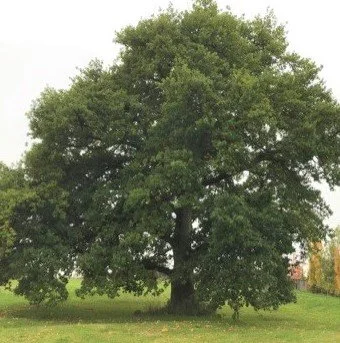
One of my favourite trees is the Garry Oak and it’s habitat. Did you know it is BC’s only native oak species? These iconic gnarled old looking trees form one of Canada’s most endangered and biologically diverse ecosystems. Today, less than 5% of these original native habitats remain in the greater Victoria area, making conservation and local preservation efforts critical.
Garry Oaks look prehistoric, they remind me of another species but in the ocean, when I would dive with friends off the breakwater in Victoria … these eels loved popping their heads out … the prehistoric looking wolf eel.
Did you know some cities have designated a tree as their city tree. Saanich this term designated a Bird the Great Horned Owl. I think we should ask our residents what tree they would like to adopt as Saanich’s Tree! For me, I would pick the great Garry Oak.
Trees help stabilize our climate in general, and also go a long way to making our communities more livable. We need to continue to protect our existing tree canopy in Saanich, and work even harder to increase it. Trees matter!
FOR MORE DETAILS, PLEASE CLICK HERE…
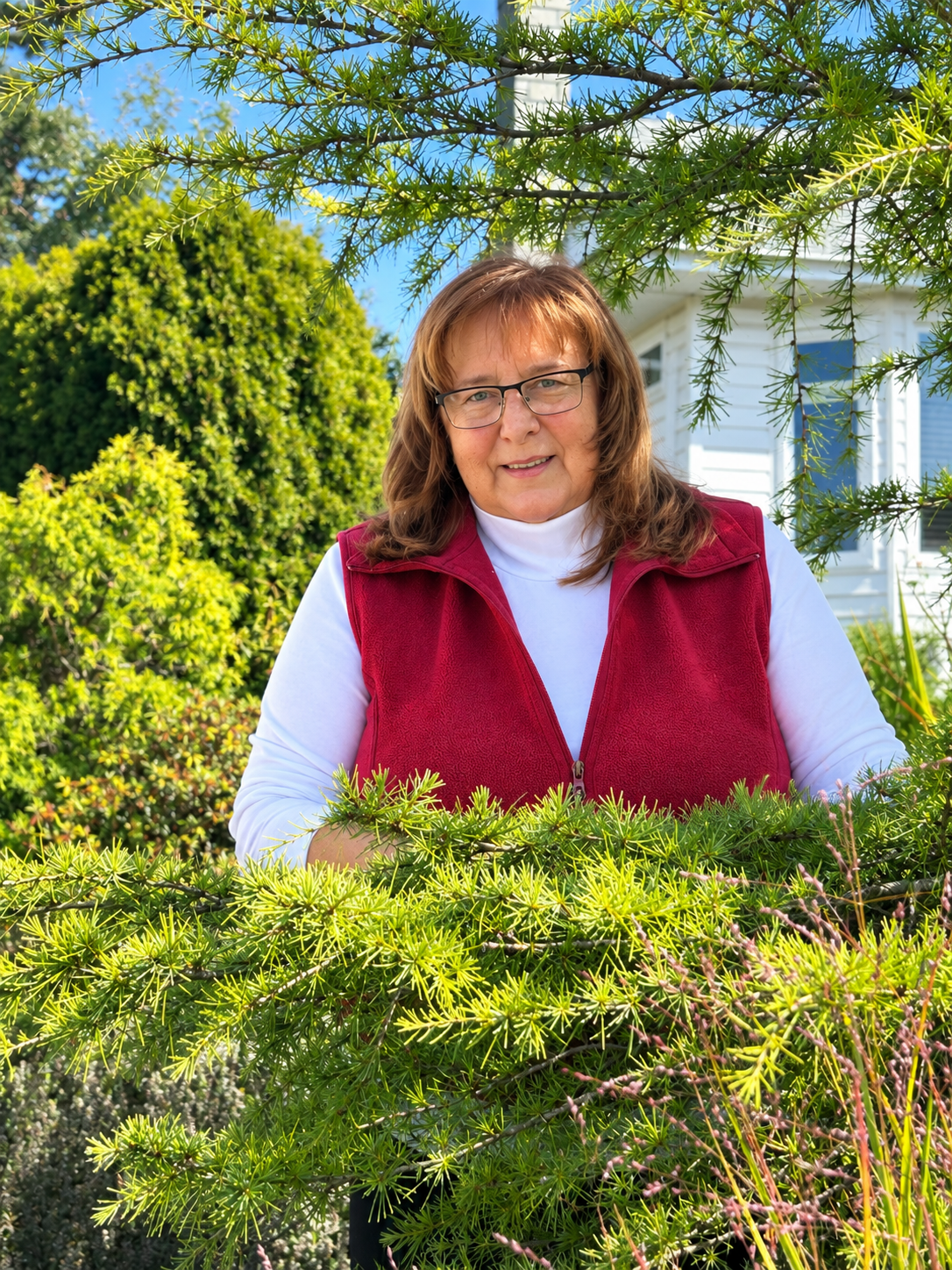
This is Judy in her Rain Garden where her lawn used to be. It helps control volume of rainfall hitting the stormwater system and also cleans some of the pollutants before ultimately the water hits our environment systems like creeks, rivers and the ocean.