Moving the CRD Forward
A map of the CRD boundaries.
Enjoying Witty's Lagoon - one of our Regional Parks.
our region
The CRD is a complex organization with a diverse mandate. I have been elected Chair of the CRD by Board Members in the past and know that the best way to get the best solutions is to work together with all members of the Board. Currently I am Chair of the Environmental Services committee, a member of the Finance standing committee and also the CRD Parks standing committee.
The CRD provides services that can be delivered efficiently and effectively through region-wide or shared delivery models. With partnerships, the CRD facilitates and delivers projects that will ensure a sustainable, livable and vibrant Region.
The CRD is the regional government for 13 municipalities and three electoral areas serving more than 383,000 citizens. There are more than 200 service, infrastructure and financing agreements.
In addition, the CRD owns and operates the Capital Region Housing Corporation (CRHC), a non-profit provider of more than 1200 affordable rental units in the region. It also administers the Capital Regional Hospital District (CRHD). The CRHD invests in traditional health care services and provides capital funding for health care infrastructure such as health facilities and hospital equipment.
Helping fish at Elk Lake get a better start.
The grasses at Rithet's Bog.
our environment
As Chair of the Environmental Services Committee there are a number of programs we have developed for teachers and schools so our future leaders can learn different issues such as why watersheds are important to getting creative at their school.
One such program was “My Green School Plan Challenge”. Grade K-12 youth teams were challenged to design a plan to reduce their school’s eco-footprint, raise student awareness and/or challenge behaviour. Two Saanich Schools were awarded funds to turn their plans into action.
Strawberry Vale Elementary School Team’s “Nature Play Project”. The maze, art wall and green gravel stream projects are being added to the nature playground.
Reynolds Secondary School Team’s “Hydroponic Project”. Reynolds students started with planting a variety of basil oregano, lettuce and mustard seeds.
The CRD is fostering the green economy on Vancouver Island by supporting the Vancouver Island Green Business Certification Program. The CRD Climate Action Service, in partnership with Saanich and Victoria led the delivery of the Climate Smart Business Program.
Currently CRD is investigating using Hartland Landfill waste to create Renewable Natural Gas (RNG). This appears to be a very exciting opportunity to reuse our waste into another useful product.
Hartland Landfill was one of the first in the province, in 2003, to beneficially utilize landfill gas. This gas has been collected and used for power production generating the equivalent electricity used by 1100 homes.
In November 2016, the CRD Board directed staff to work with Fortis BC to investigate Renewable Natural Gas business case outlining the economic and environmental implications of the RNG utilization alternative. Another “thinking outside the box” in managing and reusing regional waste.
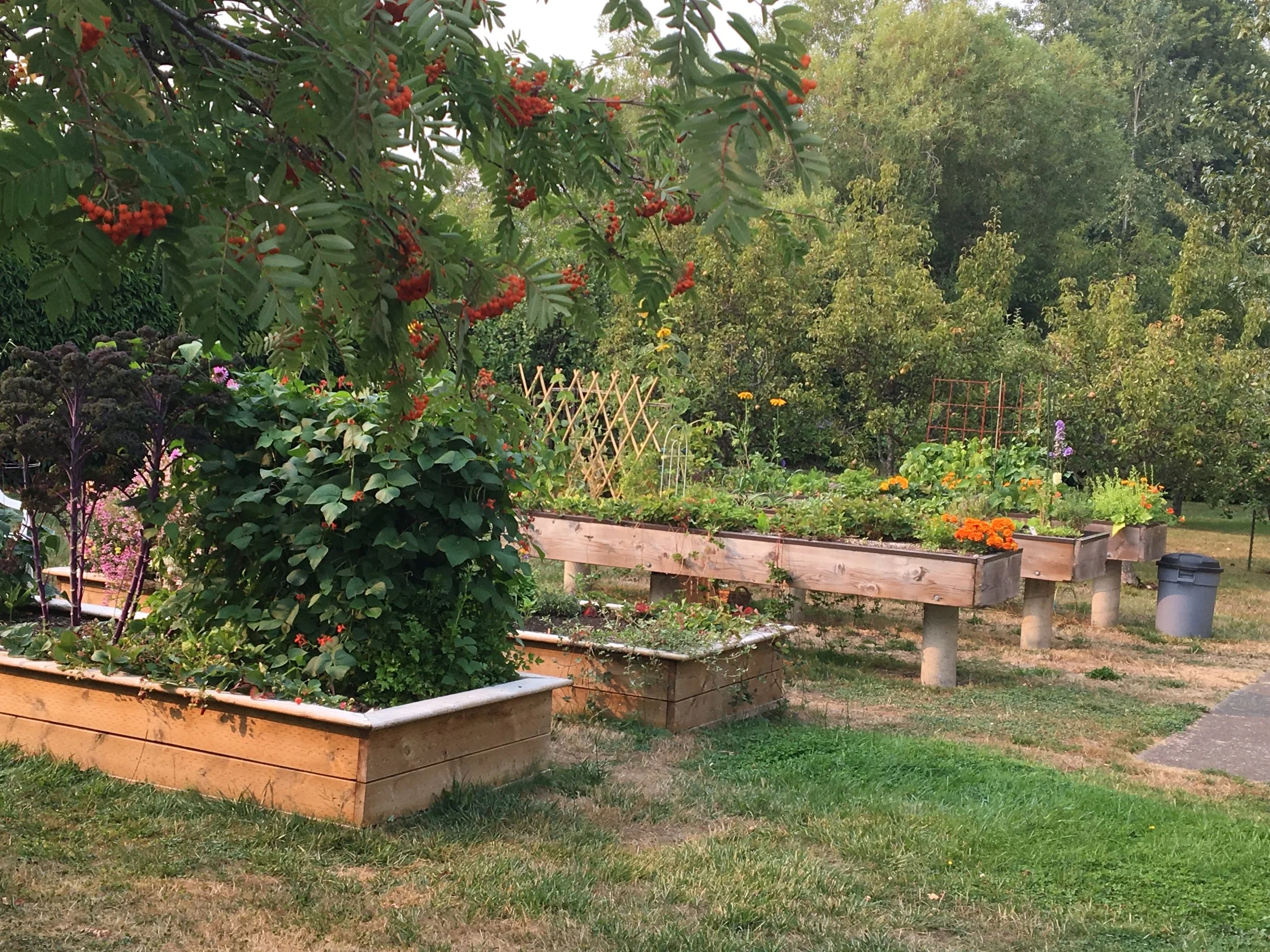
Garden beds for residents of the Viewmont Gardens CRHC housing.
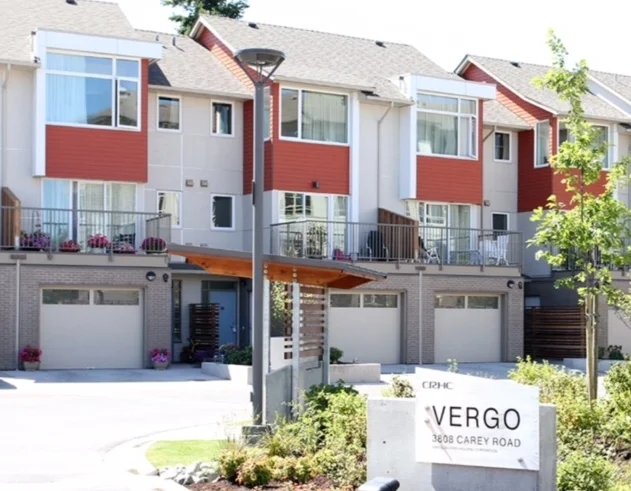
CRHC Housing on Carey Road.
our housing first
Some 40 years ago CRD established a Land Banking and Housing service and the Capital Region Housing Corporation (CRHC) was formed.
We established the Regional Housing Trust Fund which Saanich was one of the first to sign on to. Saanich has, since 2005, contributed just over $4.3 million. Through this fund CRD has invested $11.7 million dollars and leveraged more than $139 million for affordable housing. Currently CRHC owns 45 facilities (21 are located in Saanich).
Now CRD has launched our new Regional Housing First Program which will see the largest investment in housing in this Region with our partners of $90 million. This initiative is to create new rental units that address the needs of people across the housing spectrum. Plus, a focus of moving at risk individuals from streets and shelters into long-term, tenant based, supportive housing to enable recovery and integration into society.
As the Chair of Environmental Services Committee, I want to ensure that these new facilities are built with a sustainability lens. Enabling that future operational and maintenance costs are controlled through areas like energy, water and other building designs that can help reduce future operating costs and reduce CRD environmental footprint.
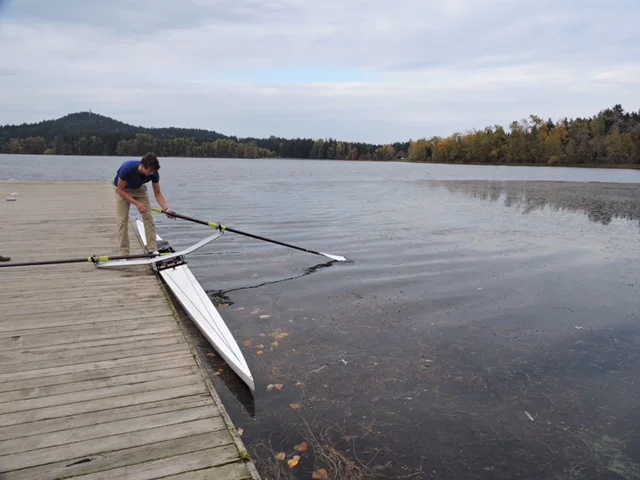
Getting ready to row on Elk Lake.
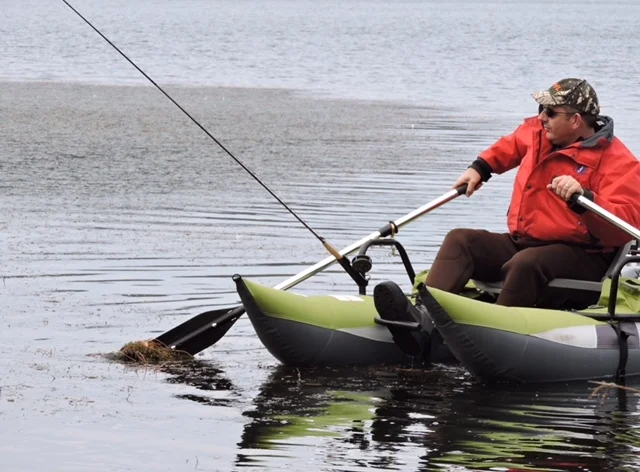
Paddling through the Milfoil.
our parks and trails
Did you know that CRD Regional Parks protects and manage more than 13,000 hectares of natural areas in 31 Regional Parks and three Regional Trails on southern Vancouver Island and the Gulf Islands?
Our Trails are a great asset to residents and tourists to explore Our Region. The Galloping Goose Regional Trail has 55 km and connects from downtown Victoria to Sooke.
The Lochside Regional Trail is 29 km and begins in Saanich and ends at the BC Ferry Terminal at Swartz Bay. The E&N Rail Trail – Humpback Connector is still under development so there are some gaps. It is 17 km between Victoria to Langford.
The popularity of CRD Trails continues to grow. In fact, the Galloping Goose saw over two million users last year. With this growth it’s time for CRD to look at widening this trail and how we can provide some separation to the slower users, walkers and the faster users, cyclists.
My goal is to work with CRD to start to address this, as a member of CRD Parks committee, in the next term. The design will be important, but this major trail needs to accommodate all users and abilities.
We have some fresh water lakes in our park system, and no one is more popular than Elk/Beaver Lake Regional Park. It’s a major asset but we have seen the continual growth of weeds. The Rowing Club and Fishing Community took me on a ride around the lake and it is evident something has to be done.
I’m pleased that CRD Parks invested in a larger new weed “whacker” but as well our advisory committee has been working on a plan. This year we will be going out for proposal call to acquire some aerating equipment. This will be a pilot to see if this type of equipment can help bring the health of this fresh water lake back. It is the material on the bottom that is depleting the oxygen in the lake and thus the increase in the weeds.
I supported this and think we must make investment in bringing back the health of the lake for the local users including the Canadian National Rowing Association and many others. Stay tuned as we move this forward.